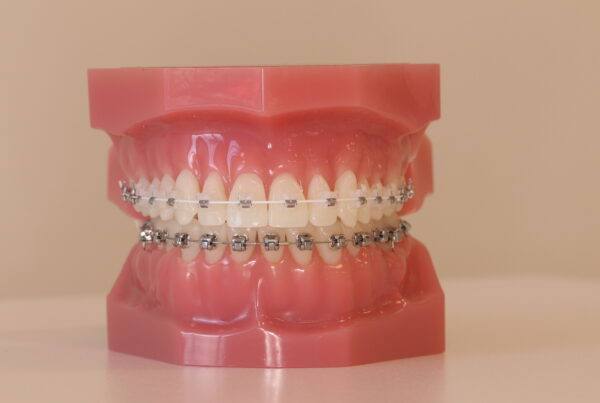
Choosing the right orthodontist can feel overwhelming – especially when every clinic promises great results. However, knowing what to look for will help you make an informed decision.
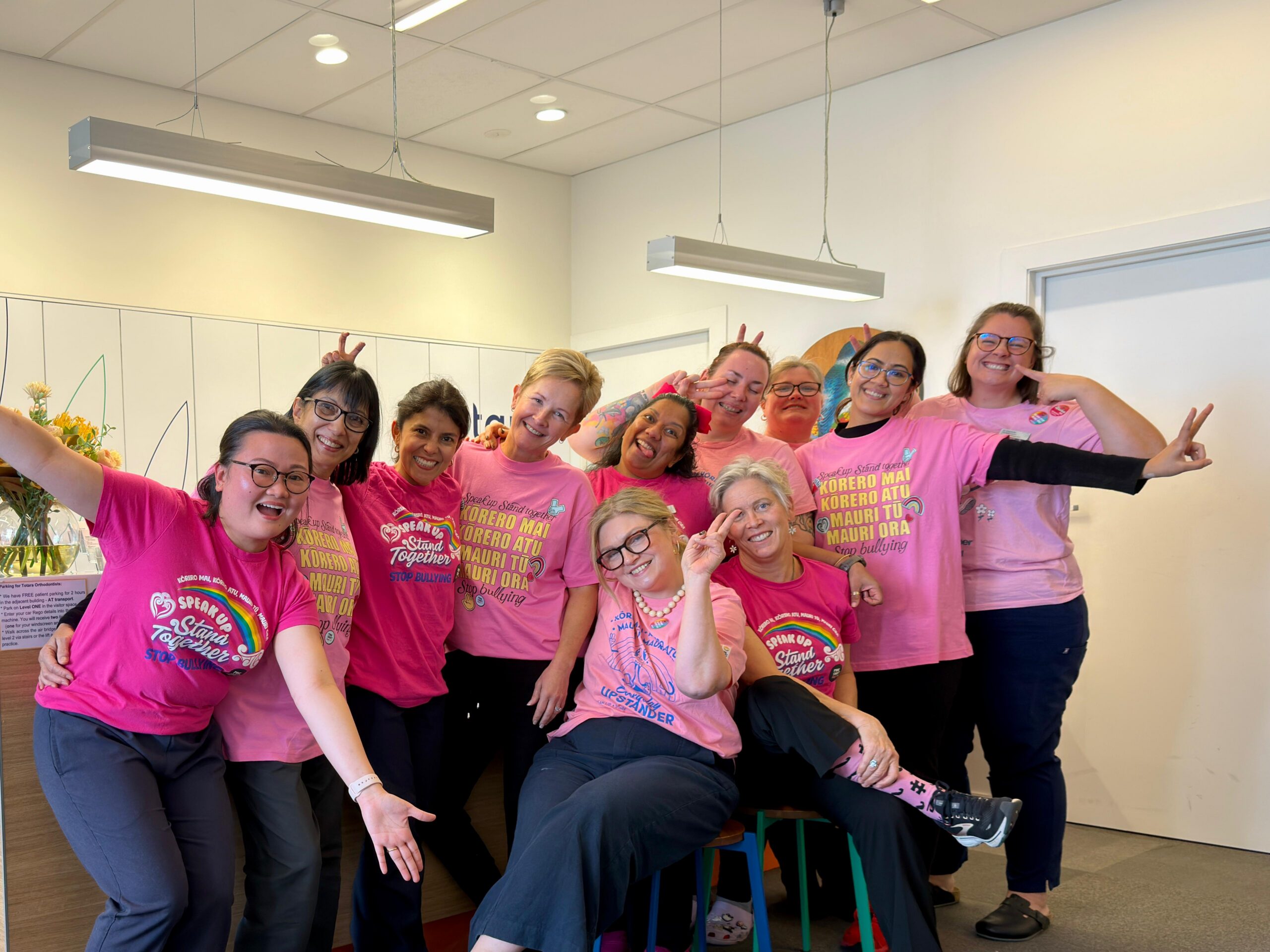
The team supporting Pink Shirt Day.
Qualifications
In New Zealand, orthodontists are dentists who have completed an additional three years of full-time specialist training in orthodontics. What does this mean? Well, advanced education enables an orthodontist to handle everything from simple crowding to complex bite and jaw problems. As the saying goes, ‘You don’t know what you don’t know.’ So, it’s not always apparent what’s straightforward and what’s difficult to fix — an issue that looks simple can sometimes be quite complex. Choosing a properly trained specialist matters.
How to find a registered specialist orthodontist
We recommend that you check out the New Zealand Association of Orthodontists website. Here you’ll find lists of registered specialist orthodontists throughout New Zealand. By choosing someone from this list, you can be confident that they’ve completed the required training and meet local professional standards.
Ongoing training
A registered specialist orthodontist keeps abreast with latest practices and technologies, such as digital scanners and clear aligners, through a mix of formal education, seminars and peer learning.
ACC cover
It’s important to note that ACC only covers orthodontic treatment when it is provided by a registered orthodontist, not a general dentist. If your orthodontic issue is related to an accident, this can make a significant financial difference and is another reason to choose a specialist.
Approach & communication
Once you’ve found an orthodontist, look at their services and approach. Do they offer a range of options — such as metal braces, ceramic braces, and clear aligners — rather than pushing just one system? A good orthodontist will explain the pros and cons of each option for your specific case, not just what’s fashionable at the time.
We take pride in our communication skills. After visiting your orthodontist for the first time, consider the following:
- Do you now have a clear idea of the plan and associated costs? Are there likely to be any costs additional to what was discussed?
- Did you receive a summary letter outlining what was discussed in your appointment?
- Is there a clear point of contact if you have any follow-up questions?
- Did you feel listened to?
- Were your questions answered clearly?
Convenience
Location and convenience shouldn’t be overlooked. Orthodontic treatment usually involves regular visits for 12–24 months, so choose a clinic that’s easy to reach from home, work or school. And, don’t forget about the availability of parking or public transport, as well as appointment times that fit your schedule.
What do others say?
Online reviews are useful. However, look for patterns rather than focusing on a single positive or negative comment. Consistent feedback about good communication, running on time and friendly staff is more useful than focusing on one good or bad review.
More questions?
Did we answer your questions, or is there something we missed? If you need more information, please get in touch. And, of course, if you enjoyed this post, please share.