If you’re exploring orthodontic treatment, you’ll probably have heard about self-ligating braces. Marketing literature claims many benefits that are often not backed up by science. In this post, we explain the real pros and cons of self-ligating braces.
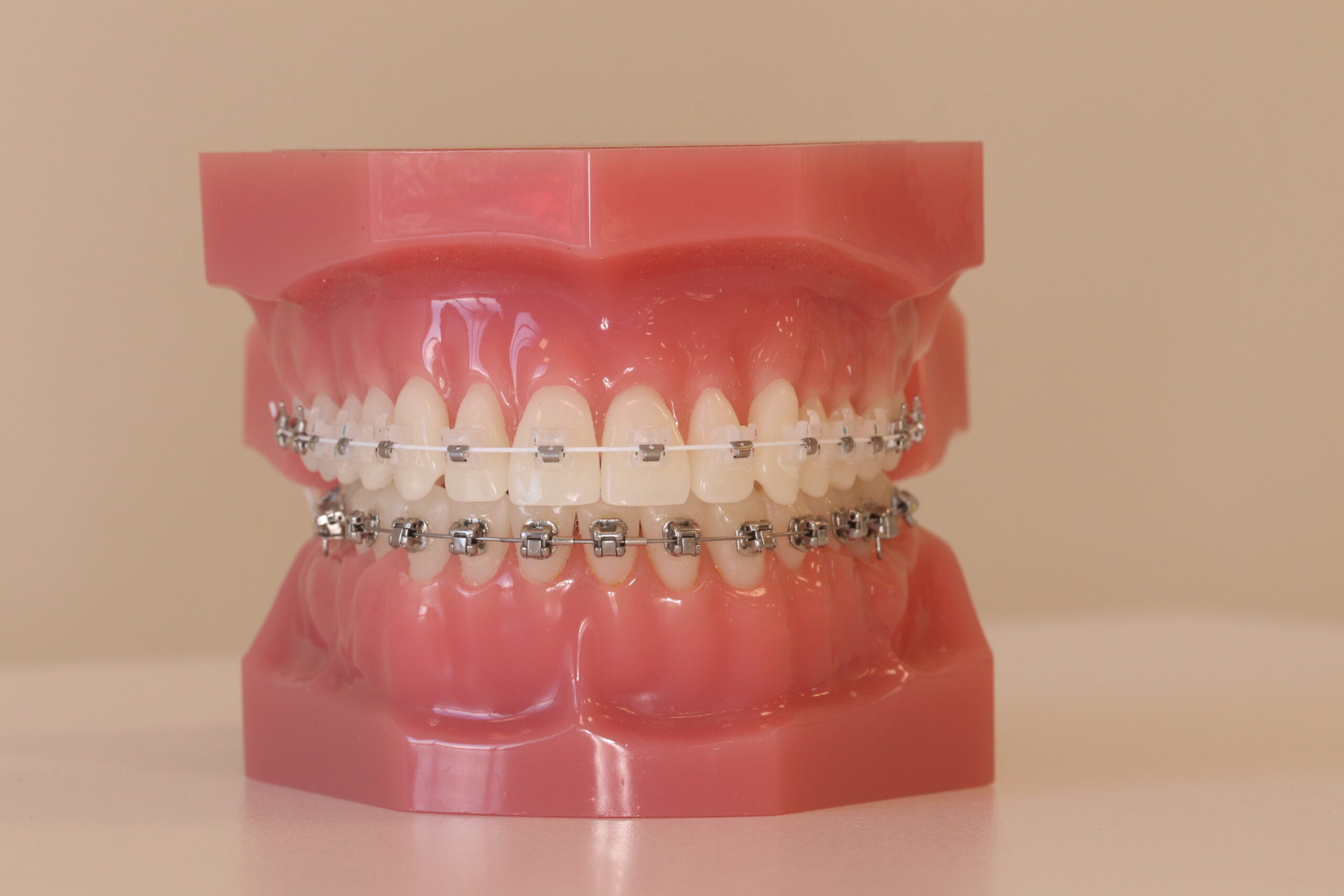
What are self-ligating braces?
Traditional braces use tiny elastic bands or metal wire (ligatures) to hold the main archwire
securely inside the brackets. Self-ligating braces eliminate the need for these bands entirely.
Instead, each bracket features a built-in metal door or clip that opens and closes to hold the
wire in place.
How do they work?
Your orthodontist opens and closes the clips using a special tool, which can make changing
and adjusting your wires slightly more efficient as it eliminates the step of removing and
replacing individual elastics.
The real benefits
Oral hygiene is the main benefit of self-ligating braces. You see, they don’t use elastic
bands, so there are fewer places for food and bacteria to hide. Consequently, self-ligating
braces retain less plaque, which makes them easier to clean and can lessen the risk of
decalcification and gum irritation.
Separate marketing claims from the facts
It is often claimed that self-ligating braces significantly speed up treatment, improve facial
growth or can treat severe crowding without the need for tooth extractions. However, these
claims are not backed by evidence. And, in reality, treatment time, growth changes and the
necessity of extractions depend entirely on your unique biology and the skill of your
orthodontist, not the type of bracket used.
The Disadvantages
While the lack of elastics helps with cleaning, self-ligating brackets do have some notable
drawbacks:
- Size: The built-in clip mechanism makes the brackets slightly larger and thicker than traditional options, which some patients find less attractive and more uncomfortable.
- Fragility: The tiny door mechanism contains moving parts that can occasionally jam or break.
- Cost: These brackets are more expensive than traditional systems.
- No colours: There are no elastic bands. So, you can’t customise your braces with colourful rings, which can disappoint younger patients who look forward to picking new colours at every visit.
Self-ligating braces at Totara
At Totara Orthodontics, we utilise high-quality self-ligating brackets specifically for our clear
ceramic braces system. Remember, every smile is unique, and no single bracket system is a
magic fix for everyone. Your orthodontist will thoroughly assess your teeth and let you know
if self-ligating brackets are the right choice for your specific treatment goals.
Any questions?
Was this post useful? If so, please share. And, if you have any questions, please get in
touch.