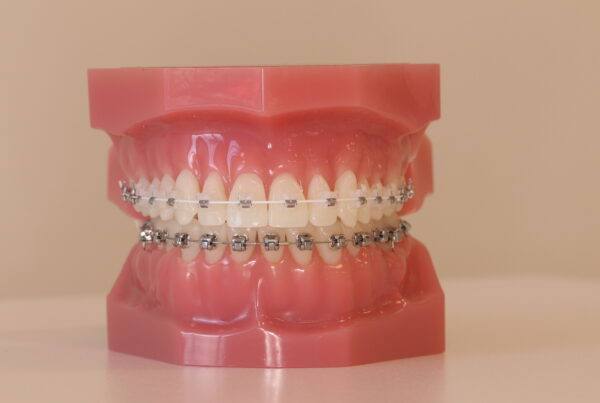
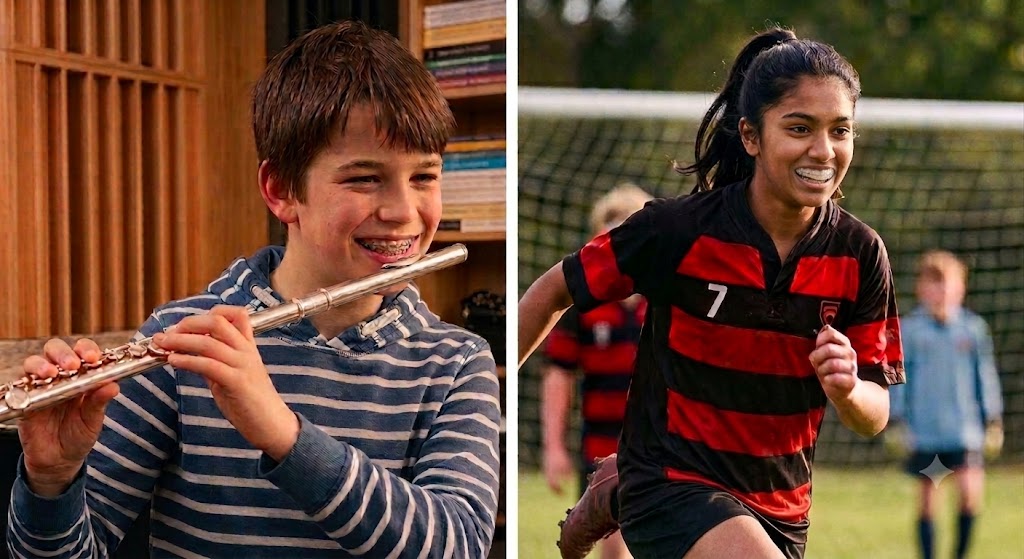
Does starting orthodontic treatment mean you have to put your hobbies on hold? Absolutely not! Whether you’re playing rugby or practicing your flute, you can continue doing what you love while straightening your teeth.
 Playing sport with braces
 Playing sport with braces
You can play any sport with braces – including high‑contact and ball sports like rugby, soccer and netball.
Protection is the key
A knock to the face without a mouthguard can damage your lips, cheeks, braces – sometimes your teeth. That’s why we strongly recommend wearing a mouthguard for any sport where contact or collisions are possible.
At Totara Orthodontics, we sell orthodontic mouthguards and can fit these for our patients in the clinic. Orthodontic mouthguards are slightly roomier than standard ones to allow for tooth movement and the brackets on your teeth.
An orthodontic mouthguard helps to:
- cushion blows to the face
- protect your lips and cheeks from being pushed into your braces
- reduce the risk of broken brackets or wires.
When should you get a custom mouthguard?
Custom mouthguards are precision fitted to your teeth, which means they will stop fitting if your teeth shift. Because your teeth will be on the move during treatment, it’s best to complete your orthodontic treatment before investing in a custom-made mouthguard. In the meantime, we can adjust your mouthguard throughout treatment.
If you’re unsure what kind of orthodontic mouthguard to use for rugby or any other sport, we’re happy to guide you.
Playing a musical instrument with braces
If you play a wind or brass instrument, it’s normal to worry about how braces might affect your playing. After all, instruments like clarinets, saxophones, flutes and trumpets all involve close contact between your lips, teeth and mouthpiece.
The good news is that you can continue to play your instrument while wearing braces; it’ll just feel different at first. After a few weeks of regular practice, playing will usually start to feel natural again.
During this time, you might notice:
- slight changes in your tone or stamina
- mild discomfort on your lips as they adjust to the braces
- the need to experiment a bit with your embouchure (mouth position)
Luckily your brain and mouth will adapt quickly. Most players find that patience, slow practice – maybe a few shorter sessions at first – is all it takes to return to their usual standard. In fact, because they become more aware of their technique, they often become better musicians.
If you experience rubbing or soreness, we can show you how to use orthodontic wax to cover any brackets that are causing irritation while you play.
Orthodontic treatment should support your lifestyle, not hold it back. With the right mouthguard while playing sport or a musical instrument, you can stay active and continue to make music.
Any questions?
Was this post useful? If so, please share, And, if you have any questions, please get in touch.